AC Installation in Auburn · 8 sections
- 01Which Auburn homes are getting air conditioning for the first time
- 02Three ways to add cooling, and where each fits in Auburn
- 03Running ducts through an older Auburn house
- 04The electrical panel often sets the plan
- 05Additions, ADUs and converted spaces
- 06Where the new coil and its condensate go
- 07Permits, condenser placement and hot-weather planning
- 08Nearby towns and related Auburn services
Which Auburn homes are getting air conditioning for the first time
This page is about putting cooling where there was none, which is a different job from swapping an old condenser. In Auburn, those projects mostly come from four situations. The first is a pre-war house near Old Town or Downtown, part of the roughly 13.6% of the city's housing built in 1939 or earlier, that was heated by a wall furnace or stove and never got ducts. The second is a mid-century house with a gas furnace and ducts but no cooling coil. The third is an addition, sunroom or converted garage that the main system cannot reach. The fourth is an accessory dwelling unit or detached studio that needs its own system.
Each of those starts from a different place, so the design starts with the house rather than with a piece of equipment. If you already have central air and it is failing, the Auburn AC replacement page is the better fit.
Three ways to add cooling, and where each fits in Auburn
The right option depends on whether the house has usable ducts, how much electrical capacity is left, and whether you also want to change how the house is heated.
| Approach | Best fit | What it involves |
|---|---|---|
| Coil and condenser added to an existing gas furnace | Houses with a forced-air furnace and sound ducts | Cased coil on the furnace, outdoor unit, refrigerant lines, condensate drain, new circuit; ducts checked for cooling airflow |
| Ducted heat pump | Houses with ducts where the furnace is old or you want electric heat | Air handler or furnace pairing, outdoor heat pump, controls; replaces or backs up gas heat |
| Ductless mini-split | Pre-war houses without ducts, additions, ADUs, converted garages | Wall, ceiling or floor heads per zone, small line-set penetrations, outdoor unit or units |
Running ducts through an older Auburn house
Heating-only ducts are rarely large enough for cooling. Cooling needs more airflow than a typical gas furnace delivers for heat, so a duct system designed only for heat can whistle, leave rooms warm and freeze the new coil if the trunk and returns are too small. Before adding a coil to an existing system, we measure the return and supply runs and check the furnace blower's capacity. Many Auburn installs need at least one added return.
Where there are no ducts, the question is space. Single-story houses with a vented attic can take new ducts. Two-story houses and houses on low crawlspaces often can't without opening walls and ceilings, and that is where ductless heads tend to make sense. Our ductless mini-split guide compares the approaches; the Manual J sizing guide explains how each room's load is worked out.
The electrical panel often sets the plan
A house that has never had air conditioning has never had to supply a compressor's circuit. Older Auburn homes with 60- or 100-amp services, or panels already full of breakers, may need a load calculation and possibly a panel upgrade before a condenser or heat pump can go in. Variable-speed equipment and smaller ductless systems draw less current and sometimes fit where a larger fixed-speed unit wouldn't.
We look at the panel during the first visit, because it can change the recommendation. Our panel requirements guide covers what to check. About 3% of Auburn households report solar energy as their heating fuel in Census estimates; a house that already has rooftop solar may have had service work done that makes room for a new circuit.
Additions, ADUs and converted spaces
Tying an addition into an existing system rarely works well. The original equipment was sized for the original house, and stretching a duct run to a new room usually leaves both spaces less comfortable. A separate system for the addition, often a single-zone ductless heat pump, keeps the original system's balance intact.
For permits filed since January 1, 2026, the 2025 Energy Code changes for single-family homes address HVAC sizing for additions, including when an addition can be served by extending the existing system. Our guide to mini-splits for ADUs, garages and additions covers the practical side.
Where the new coil and its condensate go
Adding cooling to a gas furnace puts a new coil on top of, or below, the furnace, and that coil produces water all summer. In Auburn's long cooling season, a condensate line runs for months at a stretch. Where the furnace sits in a hall closet, the drain often has to travel to a laundry standpipe or outside wall. Where it sits in an attic, the coil needs a secondary drain pan or a safety switch so a clogged line can't leak through the ceiling. Furnaces in crawlspaces often need a small condensate pump.
The coil also adds height and resistance to the airflow. An older furnace with a small blower may not have the static pressure margin to push air through a new coil and the existing ducts, which is why some first-time AC projects end with the furnace being replaced along with the cooling equipment.
Permits, condenser placement and hot-weather planning
A new cooling system needs a building permit. Inside city limits, the City of Auburn Building Division issues it, and its online portal handles applications, documents and inspection scheduling. Unincorporated addresses with Auburn ZIP codes go through Placer County. New equipment and any new or altered ducts also bring energy-code paperwork and, depending on scope, field verification by an ECC rater.
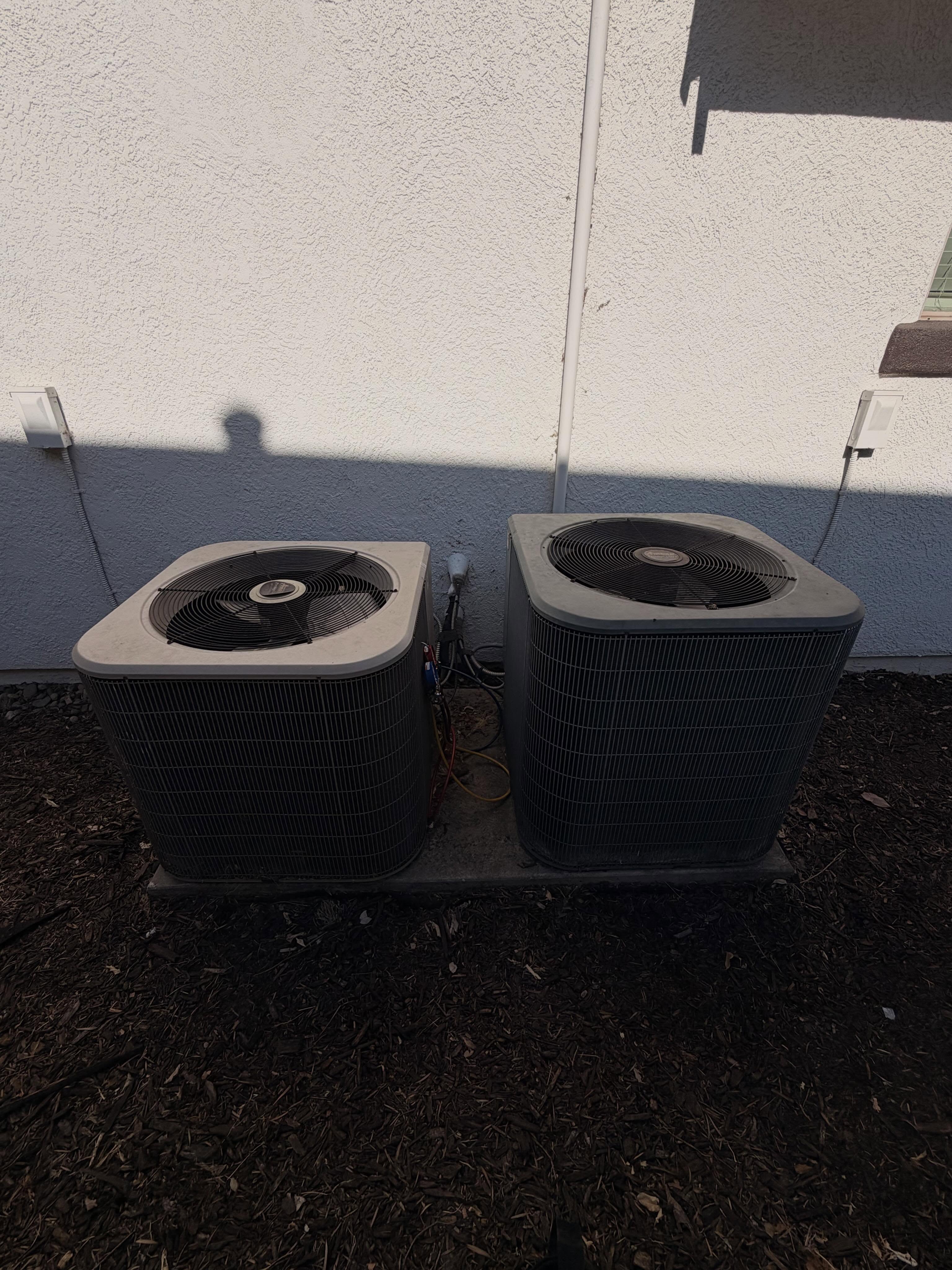
Placement matters in Auburn's heat. A condenser on a west wall that bakes in afternoon sun, or one boxed into a narrow side yard, works harder on the days you need it most. Outdoor units should have the clearance the manufacturer requires, and in parts of the city mapped as fire hazard zones, the space around them should be kept free of dry vegetation and debris. The best time to schedule a first-time install is spring, before June's average of about nine days at 90°F or hotter.
Nearby towns and related Auburn services
Homes in Newcastle and Meadow Vista raise similar first-time cooling questions, with more propane and acreage in the mix. If your project also involves replacing the heat, see furnace replacement in Auburn. For a general overview of what we install, visit the AC installation service page; the cost calculator gives a first planning range, and the Auburn service area page covers the wider city.