Sacramento County HVAC guide · 9 sections
- 01A valley-floor county where summer sets the equipment size
- 02What the Census says about Sacramento County homes
- 03The eight Sacramento County communities we cover
- 04City building departments or the county: who signs off
- 05SMUD for electricity, PG&E for gas
- 06Rule 421 and wood burning in Sacramento County
- 07Common problems in the county's 1950s–1980s houses
- 08Neighboring counties and addresses on the edge
- 09How to compare HVAC bids in Sacramento County
A valley-floor county where summer sets the equipment size
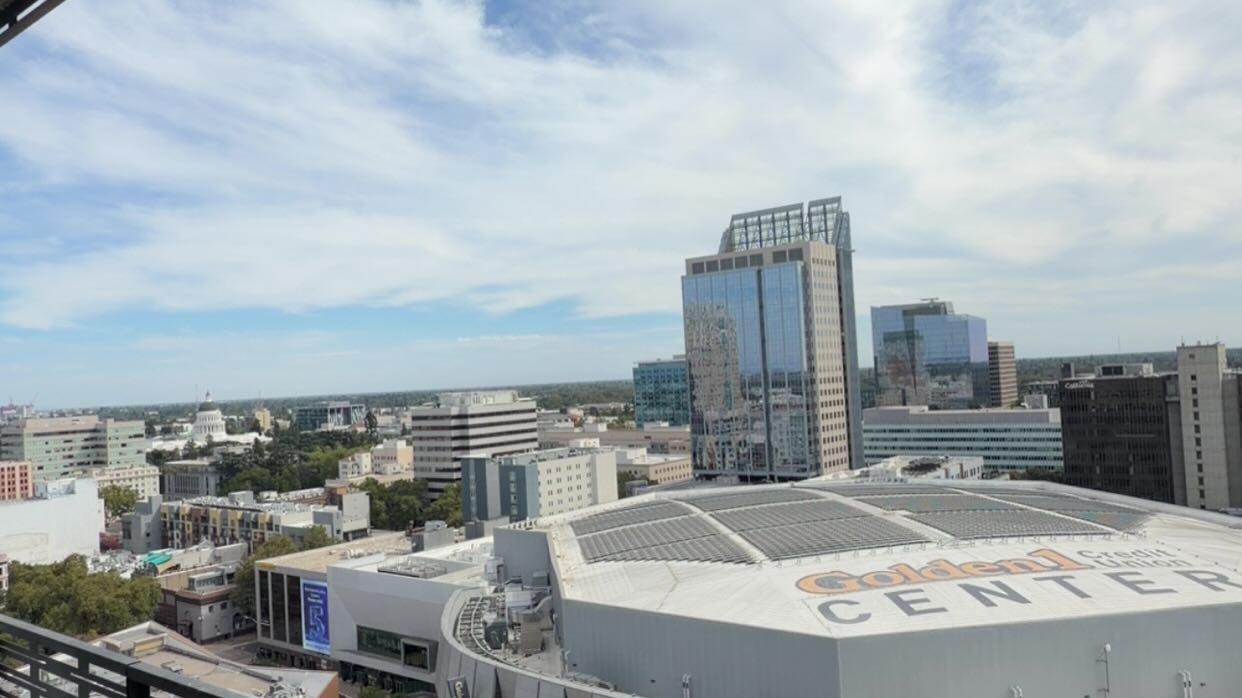
Nearly everything in our Sacramento County service area sits low on the valley floor. Downtown Sacramento is about 26 feet above sea level, Elk Grove about 46 feet and Orangevale about 240 feet. Folsom is the exception that proves the rule: the city itself sits around 220 feet, but Carpenter Hill inside its limits reaches 831 feet, the highest ground in the county. None of that is enough elevation to change the basic climate.
NOAA's 1991–2020 normals for Sacramento Executive Airport put the area at roughly 1,292 cooling degree days and 2,436 heating degree days a year, and only about 15 nights a year drop to 32°F or lower. Expect a long run of 95°F to 105°F afternoons from June into September and a heating season dominated by cool, foggy mornings rather than hard cold. Air conditioners here are sized for the worst week of July, and a heat pump that handles that week usually has capacity to spare in January. Our Manual J sizing guide walks through why copying the old nameplate tonnage is a poor shortcut.
What the Census says about Sacramento County homes
The Census Bureau's 2024 American Community Survey counts about 608,200 housing units in the county, with a median year built of 1981. Roughly 59% of occupied homes are owner-occupied, which leaves a large rental market where a landlord or property manager approves the work. Close to half of all units, about 48%, were built before 1980, and the 1970s alone account for about 106,400 homes. Those houses have usually been through two or three furnaces and condensers, while the attic ducts and the electrical panel may still be original.
Heating fuel is close to a two-way split. About 58% of occupied homes heat mainly with PG&E natural gas and about 39% with electricity, a far higher electric share than in the foothill counties next door. Propane and wood together heat barely 2% of homes. For a gas household, switching to a heat pump means adding electrical capacity and giving up the furnace; for an electric household, it is often a straight efficiency upgrade. Our heat pump vs. furnace comparison explains how to weigh the two paths, and the Sacramento HVAC lifespan guide covers how long each piece of a system tends to last in this heat.
| Main heating fuel | Occupied homes | Share |
|---|---|---|
| Utility natural gas | 334,151 | 57.7% |
| Electricity | 224,243 | 38.7% |
| Bottled or tank gas (propane) | 10,065 | 1.7% |
| Solar | 3,814 | 0.7% |
| Wood | 934 | 0.2% |
| Other fuels or no heating fuel | 5,580 | 1.0% |
The eight Sacramento County communities we cover
Five of these places are incorporated cities with their own building departments. Arden-Arcade, Orangevale and Rancho Murieta are unincorporated census-designated places that rely on the county for permits. The table summarizes the differences, and each community has a dedicated page with its own housing figures, neighborhoods and permit details.
Sacramento, the state capital, has the widest range of any community we serve, from pre-1940 bungalows near the original street grid to Natomas tracts and new infill. Start with the Sacramento HVAC page, or see AC repair in Sacramento when the house will not cool down.
Elk Grove became a city only in 2000, and its median home dates from that same year. A large share of its original systems went in during the 1990s and 2000s building boom and are reaching the end of their service life together. The Elk Grove HVAC page covers the Laguna, East Franklin and Laguna Ridge areas, and furnace repair in Elk Grove handles winter breakdowns.
Folsom has a 1997 median year built and a growing south-of-50 plan area. Its homes lean heavily on gas heat, which makes gas-to-heat-pump questions common. See the Folsom HVAC page and AC repair in Folsom.
Citrus Heights was largely built during the 1970s, and close to half of its households heat with electricity. Original ductwork and older electrical service come up often. The Citrus Heights HVAC page explains the city's permit portal, and furnace repair in Citrus Heights covers heating calls.
Rancho Cordova pairs a post-war core north of Highway 50 with master-planned neighborhoods such as Anatolia and The Ranch that are still under construction. Read the Rancho Cordova HVAC page, or go to AC repair in Rancho Cordova.
Arden-Arcade carries a Sacramento mailing address but has never incorporated, and most of its households rent. Its median home is from 1966. The Arden-Arcade HVAC page covers mid-century houses and rentals, and furnace repair in Arden-Arcade handles older gas equipment.
Orangevale is another unincorporated community, with larger lots, a 1976 median year built and high owner-occupancy. The Orangevale HVAC page includes its wood-burning and permit details, and AC repair in Orangevale addresses summer failures.
Rancho Murieta is a guard-gated community on Jackson Road (State Route 16), about 25 miles east of Sacramento, with a 1990 median year built and almost no rentals. It breaks the county pattern on fuel: electricity and tank propane heat most of its homes, and utility gas only about one in nine. The Rancho Murieta HVAC page covers its association rules, gate access and nearby Sloughhouse.
| Community | Incorporated? | HVAC permit office | Median year built (ACS) |
|---|---|---|---|
| Sacramento | Yes, 1850 | City of Sacramento Building Division | 1976 |
| Elk Grove | Yes, 2000 | City of Elk Grove Building Safety & Inspection | 2000 |
| Folsom | Yes, 1946 | City of Folsom Building Services (eTRAKiT) | 1997 |
| Citrus Heights | Yes, 1997 | City of Citrus Heights Building & Safety Division | 1977 |
| Rancho Cordova | Yes, 2003 | City of Rancho Cordova Building & Safety | 1979 |
| Arden-Arcade | No (CDP) | Sacramento County Building Permits & Inspection | 1966 |
| Orangevale | No (CDP) | Sacramento County Building Permits & Inspection | 1976 |
| Rancho Murieta | No (CDP) | Sacramento County Building Permits & Inspection | 1990 |
City building departments or the county: who signs off
A Sacramento mailing address does not mean the City of Sacramento issues the permit. Arden-Arcade, Orangevale, Carmichael, Fair Oaks and the rest of unincorporated Sacramento County are handled by the Sacramento County Building Permits & Inspection Division, which takes applications through its Accela online portal and runs its Building Assistance Center at 9800 Goethe Road. Homes inside city limits go to that city instead, for example the City of Sacramento Building Division, Elk Grove's eTRAKiT system or Folsom's ePermit Center.
The paperwork follows the same state rules everywhere. Replacing a furnace, air handler, condenser or heat pump is treated as an alteration under California's Title 24 energy code, so a permit is expected and, in most cases, a HERS rater verifies duct leakage and refrigerant charge before final. Since January 1, 2026, those checks follow the 2025 edition of the code, whichever office holds the permit. The duct leakage test guide explains what the rater measures and why older duct systems sometimes need sealing before a changeout can pass.
SMUD for electricity, PG&E for gas
All eight communities on this page buy their electricity from SMUD, the publicly owned utility that took over PG&E's local distribution system in 1946. Folsom came later: according to SMUD's own history, Folsom residents voted to join the district in 1984, after a long fight with PG&E. Natural gas is a different story, with PG&E delivering gas throughout the county. A typical home here therefore gets two utility bills, and incentive programs for electric equipment come from SMUD rather than PG&E.
When we checked SMUD's residential HVAC rebate page on November 12, 2026, it listed $3,000 for replacing gas heat with a variable-stage heat pump, $2,000 for a two-stage heat pump, and $1,000 for upgrading existing electric heat. Separate Go Electric amounts of up to $5,500 covered panels, subpanels and circuits for gas-to-electric switches. SMUD requires installation and submission by a contractor in its Contractor Network and notes that rebates depend on funding, so homeowners should confirm both before signing. Single-stage equipment does not qualify. Our SMUD heat pump rebate guide tracks the program in more detail.
Two incentives that still appear in older articles no longer help. The federal 25C credit ended for equipment placed in service after December 31, 2025, so a heat pump installed this year cannot use it, and TECH Clean California announced on February 24, 2026 that Northern California's single-family HEEHRA heat pump money was fully spoken for.
Rule 421 and wood burning in Sacramento County
Wood heat is rare here, but fireplaces are not, and the Sacramento Metropolitan Air Quality Management District regulates them throughout the county, inside city limits and out. Its Check Before You Burn season, under Rule 421, covers every November, December, January and February. On a Stage 1 "No Burn Unless Exempt" day, burning is illegal unless the device is an EPA-certified stove, insert or pellet stove that is not putting out visible smoke. On a Stage 2 day, every solid fuel is off limits in every device, certified or not. The district's 2024–25 program FAQ attributes more than half of the county's winter fine-particle pollution to wood smoke and lists a $50 penalty for a first violation, which can be replaced by passing a wood smoke awareness exam.
The rule touches HVAC planning directly. If a furnace or heat pump fails during the season, the district allows a temporary exemption request until the heater is repaired, but it must be approved first. And on the coldest, stillest winter days, the fireplace is exactly what you may not be allowed to use. Homes that lean on a fireplace to warm a cold family room or an addition are often better served by fixing the duct run to that room or adding a ductless head. The ductless mini-split guide covers when that option makes sense.
Common problems in the county's 1950s–1980s houses
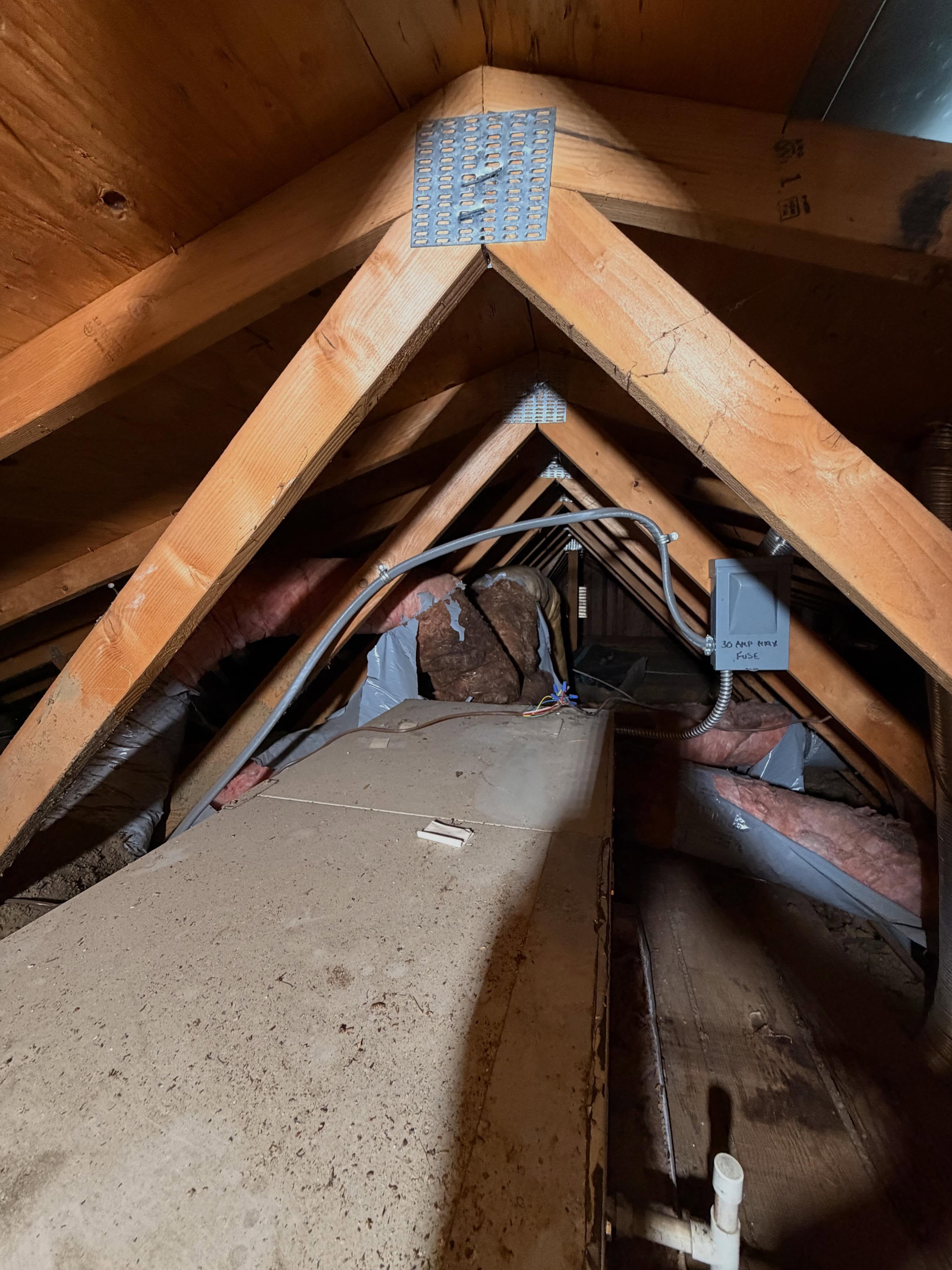
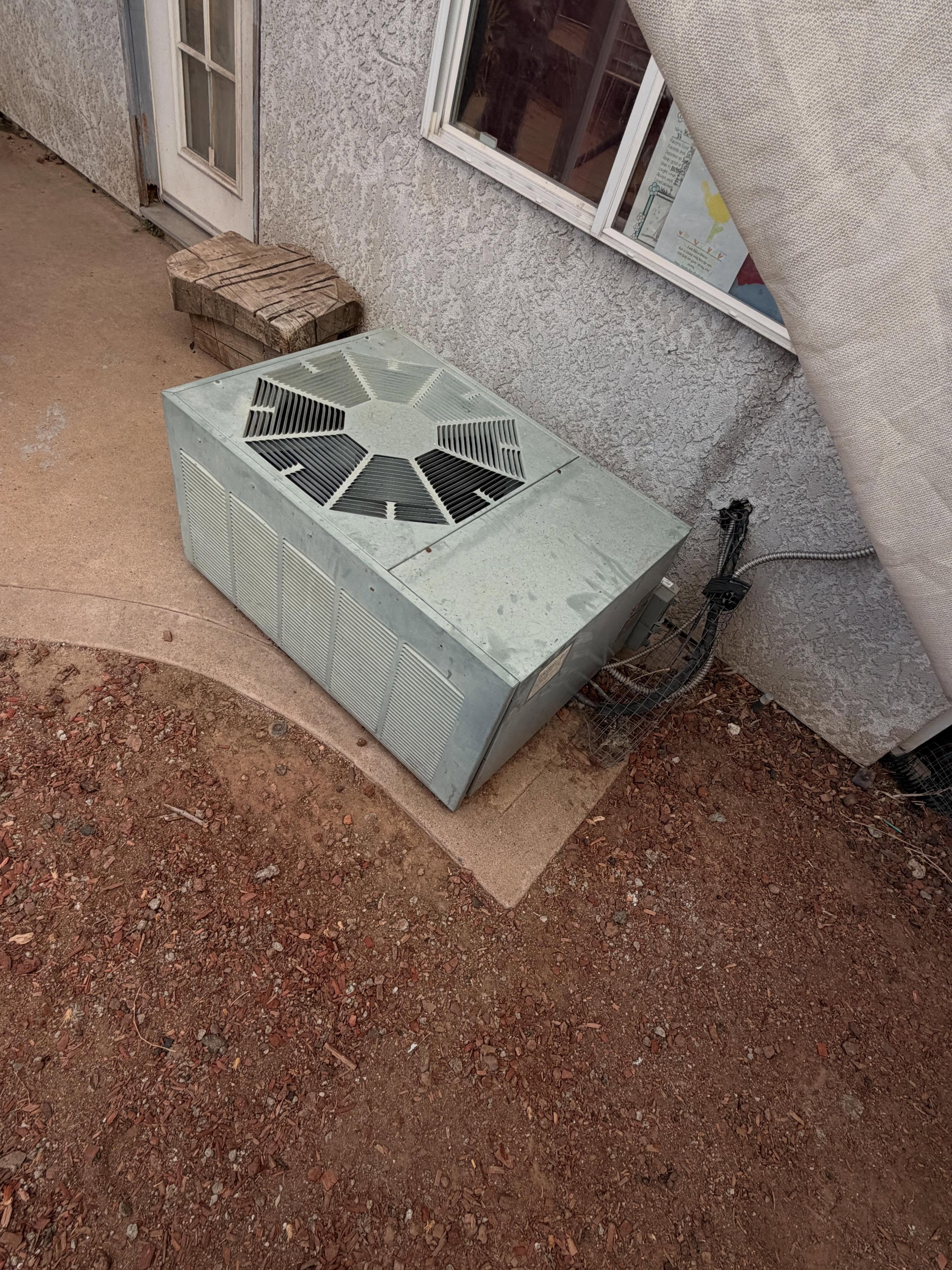
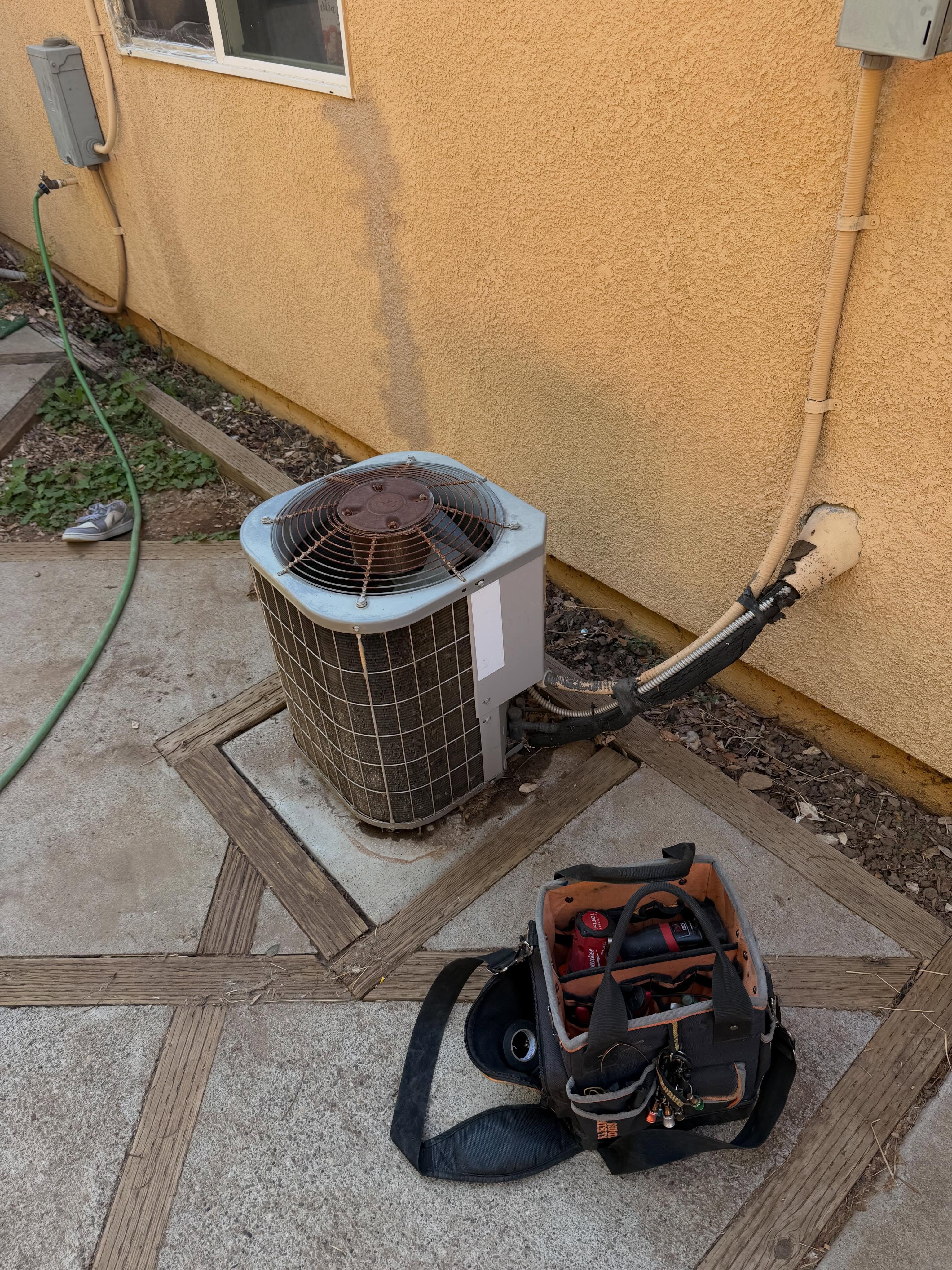
With nearly half the county's homes built before 1980, a handful of issues show up again and again. Return air is often undersized for the blower, so a new system runs loud and short of capacity. Flex or metal duct in hot attics can lose a large share of the cooling it carries, and older systems may still use R-22 refrigerant, which is no longer produced. Many of these houses also have 100-amp panels that need review before a heat pump, a second system or an EV charger goes in.
Newer stock in Elk Grove, Folsom and south Rancho Cordova has a different list: builder-grade equipment reaching its first replacement, two-story homes with a hot upstairs, and attic air handlers that are hard to reach. Our guide to why an AC stops cooling covers the symptoms that tend to appear first in either kind of house.
Neighboring counties and addresses on the edge
Sacramento County borders our other service counties, and some addresses straddle the line in ways that matter. Folsom and El Dorado Hills share a border but use different electric utilities, SMUD on one side and PG&E with Pioneer Community Energy on the other. Citrus Heights and Orangevale sit just south of Roseville and Granite Bay in Placer County. If your home is near one of those lines, the El Dorado County hub or the Placer County hub may describe your utility and permit office better than this page does.
How to compare HVAC bids in Sacramento County
A strong bid in this county answers four questions in writing: which office issues the permit, whether a HERS verification is included, what load calculation the equipment size is based on, and whether the equipment meets SMUD's rebate rules if you are counting on one. Bids that quote a replacement by the old unit's tonnage, leave the permit to the homeowner, or assume a rebate without checking eligibility tend to cost more later.
Statewide HVAC has been licensed since 2017 under CSLB #1023360, which covers the C-20 heating, ventilating and air-conditioning trade and C-43 sheet metal work. We work on homes and light commercial buildings and service Carrier, Trane, Lennox, Goodman, Mitsubishi Electric and York equipment. Any contractor's license can be checked through the CSLB lookup. For a ballpark before a visit, try the HVAC cost calculator, then reach us online or call (916) 461-3405 from our Roseville office.