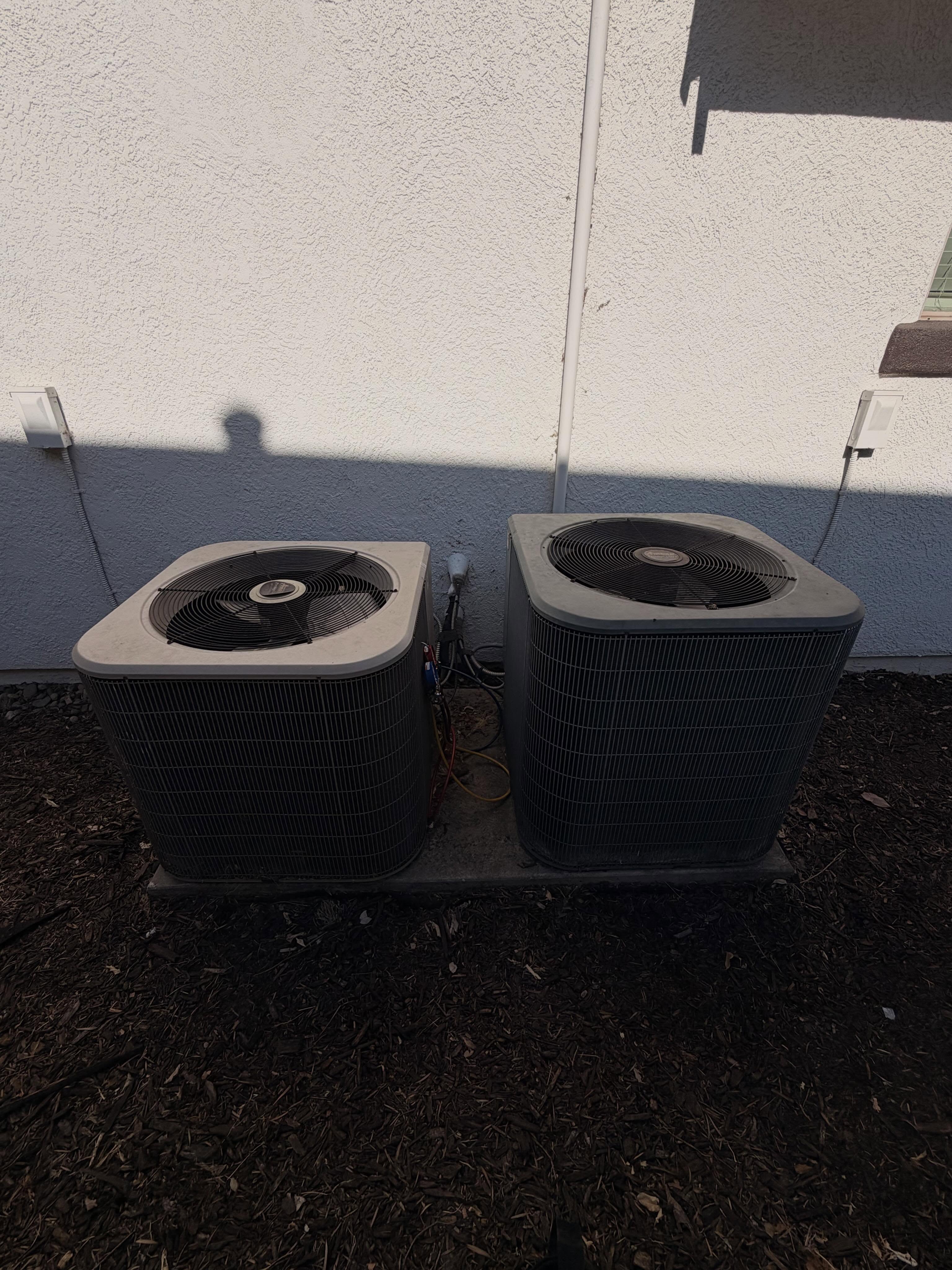
Heat Pump Installation in Auburn · 6 sections
Why Auburn's climate works for a heat pump
A heat pump's efficiency drops as the outdoor air gets colder, so the coldest nights matter most. At the Auburn station, NOAA's 1991–2020 normals show an average of 0.2 nights a year below 20°F, no nights below 10°F, and a January average low of 37.8°F. Most winter hours sit well above the range where heat pumps struggle. Even the roughly 20 nights a year that dip below freezing are usually only a few degrees under 32°F.
The same equipment then handles the cooling. Auburn logs about 1,453 cooling degree days a year in NOAA's normals, so the summer half of the job matters as much as the winter half. A heat pump sized properly for Auburn's cooling load generally has enough heating capacity for its winters as well, which is not true in colder foothill towns. Our cold-weather performance and HSPF2 guide explains how to read the ratings; units meeting the ENERGY STAR cold-climate criteria keep at least 70% of their capacity at 5°F, a temperature Auburn's normals never reach.
What a heat pump replaces in Auburn homes
In Auburn, the project usually starts from one of four heating setups, and each leads to a different installation.
| Existing heat | Share of Auburn homes (ACS 2020–2024) | Typical heat pump approach |
|---|---|---|
| Gas furnace with ducts, often with central AC | About 63% heat with utility gas | Ducted heat pump on a new air handler, or dual fuel with the furnace kept as backup |
| Electric resistance (baseboard, wall heaters, strip heat) | About 28% heat with electricity | Ductless heads in the main rooms, or a ducted unit if ducts exist |
| Wood stove or insert | About 2.5% heat with wood | Ductless system sized for the living area, often through the county changeout program |
| Propane | About 1% | Ducted or ductless, removing the tank refills from the heating budget |
Converting a gas-heated Auburn house
For most Auburn homes, the heat pump replaces an AC and either replaces or supplements a gas furnace. A dual-fuel system keeps the furnace as a backup for the coldest hours and lets the heat pump carry the rest. A full conversion removes the furnace and uses an electric air handler with backup heat strips. In Auburn's climate, those strips should run rarely if the heat pump is sized correctly. The heat pump vs. furnace comparison and crossover temperature guide help with that decision.
Existing ducts need checking either way. A heat pump delivers warm air at a lower temperature than a gas furnace, so leaky or undersized ducts that went unnoticed with gas become noticeable. If the house also needs a furnace replaced, see furnace replacement in Auburn; if the AC is the failing part, AC replacement in Auburn covers that path.
Replacing a wood stove: Placer County's changeout vouchers
Placer County's air district runs a Wood Stove Changeout Incentive Program that includes electric heat pumps. As of October 28, 2026, the program page lists up to $5,000 for a heat pump, or up to $10,000 at the enhanced level for qualifying low-income households. To qualify, the existing stove, insert or fireplace has to be operational, uncertified (generally made before 1988), and the home's primary heat source. Do not remove the old device or buy a replacement before the voucher is approved.
Vouchers have to be redeemed through the participating retailers listed on the program page, so check that list before signing with any installer. Separately, the district's point-of-sale rule requires a non-EPA-certified free-standing wood stove to be made inoperable before a home is sold.
Ducted or ductless in an Auburn house
Ducted systems fit houses that already have sound ducts, which covers most of Auburn's 1970s through 2000s homes. Ductless systems fit the older end of the housing stock: pre-war houses near Old Town that never had ducts, houses heated by electric baseboard, and additions or ADUs. Multi-zone ductless systems can heat and cool several rooms from one outdoor unit, though each zone needs a sensible place for its indoor head. The ductless mini-split guide compares them in more detail.
The electrical panel is the other constraint. Removing a gas furnace doesn't free up electrical capacity, and adding a heat pump and backup heat draws more. Older Auburn houses with small services may need a load calculation or a panel upgrade first; our panel requirements guide explains what is checked.
Permits, refrigerant and incentives
Every heat pump installation in Auburn needs a building permit. Inside city limits, the City of Auburn Building Division issues it through its online portal; North Auburn and other unincorporated parcels go to Placer County. Energy-code compliance and, depending on scope, ECC rater verification are part of closing the permit. New heat pumps generally use R-454B or another lower-GWP refrigerant, a change covered in our refrigerant transition guide.
Outside the wood stove program, incentives are limited. The federal 25C credit ended for equipment placed in service after December 31, 2025, and TECH Clean California's single-family funds have been fully reserved since February 24, 2026. The Northern Rural Energy Network serves Placer County and lists heating and cooling rebates for PG&E and Pioneer customers by ZIP code; it doesn't allow two CPUC-funded rebates on the same equipment. Roseville is different, since the city-owned utility there offers its own programs; see heat pump installation in Roseville. Nearby, we also install in Meadow Vista. The heat pump installation service page and cost calculator help with planning, and the Auburn service area page covers our other local work.