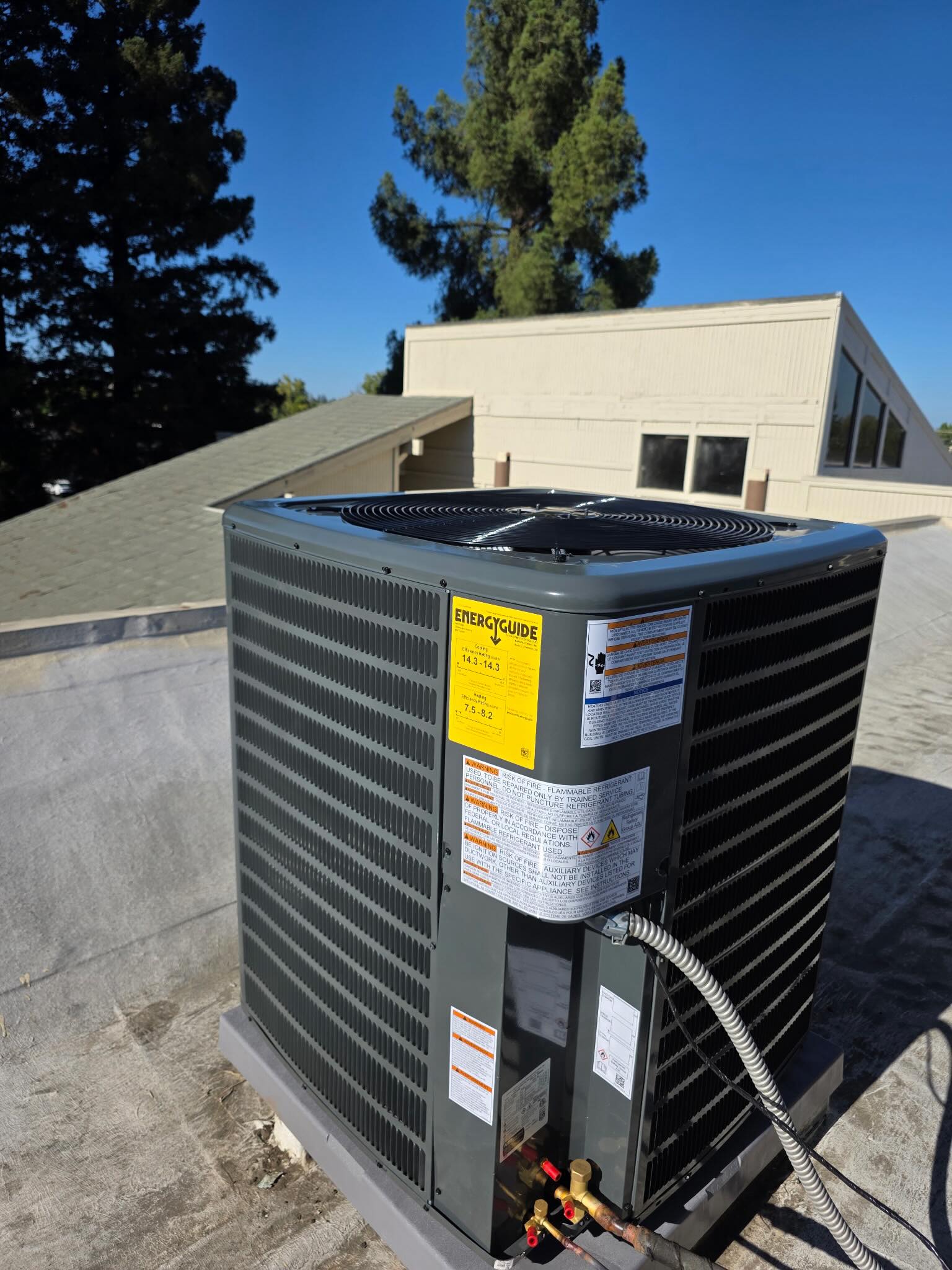
Heat Pump Installation in Arden-Arcade · 7 sections
Why the climate is rarely the obstacle here
NOAA's 1991–2020 normals for the Sacramento 5 ESE station show January lows averaging 41.1°F and only about four nights a year at or below 32°F. Modern heat pumps are designed to keep heating well below those temperatures, so cold-weather performance ratings carry less weight in Arden-Arcade than in the foothills. Our HSPF2 guide explains the ratings if you want to compare models anyway.
Summer is the bigger design factor. The same normals average about 90 days a year at 90°F or above, so the heat pump is usually sized to the cooling load, then checked against the heating load. Our guide to heat pump sizing and crossover temperature covers how the two loads are balanced.
Under the 2025 Energy Code, which applies to permit applications from January 1, 2026, the CEC's summary of single-family changes says supplementary electric resistance heat on a heat pump may operate only below 35°F outdoors, except during defrost or emergency heat. With so few freezing nights, a correctly sized system in Arden-Arcade should rarely need its backup strips. The installer configures that lockout at startup, so ask to see the setting before the system is handed over.
SMUD rebates: what qualifies in Arden-Arcade
Arden-Arcade's electricity comes from SMUD, and gas from PG&E. The amounts below are from SMUD's HVAC rebate page as checked on October 30, 2026. Programs change, so confirm current terms before signing a contract. Our SMUD heat pump rebate guide goes into the paperwork.
| Situation | Listed rebate | Key conditions |
|---|---|---|
| Variable-stage heat pump replacing gas heating | $3,000 | Installed by a SMUD Contractor Network member; permitted |
| Two-stage heat pump replacing gas heating | $2,000 | 15.2 SEER2 minimum; single-stage systems don't qualify |
| Panel and circuit work for the gas-to-electric conversion | Up to $5,500 | Done as part of the qualifying conversion |
| Upgrading an existing electric heat pump | $1,000 | Replaces an existing electric heat pump |
Rental properties and building size
More than half of Arden-Arcade's occupied homes are rented, and about 34.8% of housing units are in buildings with five or more units, per the Census Bureau. SMUD's residential HVAC rebates apply to buildings of up to four units in which each unit is separately metered by SMUD. A single-family rental, duplex, triplex or fourplex can qualify; a larger complex falls outside that residential program.
SMUD requires a SMUD Contractor Network installer to submit the rebate, so ask any contractor you're considering whether they are in the network and check SMUD's own list before relying on the rebate. Treat the rebate as pending until SMUD approves it, and keep the permit and equipment documents in case SMUD asks for them.
Electrical panels in mid-century houses
Arden-Arcade's median home was built in 1966, and many older panels are smaller or fuller than a modern all-electric house needs. A heat pump needs its own circuit, and if it replaces a gas furnace, the indoor air handler may need one too. Before choosing equipment, we review the panel and the home's existing electrical loads. Our panel requirements guide explains what to look for.
If a panel upgrade is needed, Sacramento County's building FAQ lists residential electrical panel repair or replacement among the permits it can issue automatically online, and SMUD's panel and circuit rebate can apply when the work is part of a qualifying gas-to-electric conversion. Variable-speed equipment with lower starting current can sometimes avoid an upgrade altogether. Removing the gas furnace also frees no electrical capacity, since a gas furnace draws little power, so the calculation has to account for the new indoor unit as well as the outdoor one. In houses that also have an electric range, dryer or EV charger, a load calculation of the panel is the step that settles the question.
Using existing ducts, or going ductless
A central heat pump uses the existing ducts, which in many Arden-Arcade homes were sized for a furnace and later stretched to carry cooling. A heat pump moves similar air volumes in both seasons, so undersized returns and leaky attic ducts affect winter comfort as well as summer. Testing static pressure and duct leakage before installation shows whether the ducts need repair. A heat pump delivers warm air at a lower temperature than a gas furnace, so drafty supply registers near windows or a long, leaky run to a back bedroom are more noticeable in winter than they were with gas heat. Sealing and, where needed, resizing the worst runs during the installation is usually the difference between a heat pump that feels comfortable and one that gets blamed for a duct problem.
For homes without ducts, garage conversions and additions, a ductless mini-split heat pump is often simpler. Larger riverfront homes in Sierra Oaks or Arden Park sometimes combine both: a central system for the main house and ductless heads for a distant wing. Splitting the load that way can also keep the central unit small enough to fit the existing ducts.
Permit, verification and refrigerant
The installation is permitted by Sacramento County, since Arden-Arcade is unincorporated, and residential heating and cooling permits can be issued through the county's online portal. Depending on scope, an ECC rater (formerly HERS) verifies refrigerant charge or airflow and, where ducts are altered, duct leakage. New heat pumps generally use lower-GWP A2L refrigerants such as R-454B under EPA's technology transitions rule.
Other incentives are limited. TECH Clean California's single-family funds in Northern California have been fully reserved since February 24, 2026, and the federal 25C credit ended for equipment placed in service after December 31, 2025.