AC Replacement in Orangevale · 7 sections
- 01Condenser only, matched pair or the whole system
- 02Sizing for Orangevale's summers, not the old nameplate
- 03New refrigerants and what they change on an Orangevale job
- 04The attic ducts behind the new equipment
- 05The Sacramento County permit path for an Orangevale changeout
- 06Straight AC or heat pump in a SMUD home
- 07From first visit to county final
Condenser only, matched pair or the whole system
According to the ACS year-built table, 4,013 of Orangevale's 14,184 housing units were built in the 1970s and another 3,055 in the 1980s. In houses that age, the cooling equipment has usually been replaced at least once already, often under pressure in the middle of summer. Before quoting, we sort out which of three jobs you actually need:
- Outdoor unit plus indoor coil. The usual scope when the furnace is sound. With current refrigerants, the coil is part of the job, not an option (see below).
- Full split system. When the furnace is also near the end of its life, replacing both together avoids a second disruption and lets the blower and coil be rated as a set. Our Orangevale furnace replacement page covers the heating side.
- A heat pump instead of an AC. Same outdoor footprint, but it also heats, and in a SMUD home it's the only route to a utility HVAC rebate. See heat pump installation in Orangevale.
Sizing for Orangevale's summers, not the old nameplate
The old unit's tonnage is the least reliable number in the house. Many Orangevale homes have added a family room, enclosed a patio or converted a garage since the original system went in, and some have since added insulation or new windows, which pushes the load the other way. A Manual J load calculation starts from the house as it is today.
The design target matters here. NOAA's 1991–2020 monthly normals for the Sacramento 5 ESE station put the average July high at 94.4°F, and the station's annual normals show roughly 23 days a year at 100°F or hotter. A system sized to the average day leaves you warm on those afternoons; one oversized for them short-cycles the rest of the summer, removes less humidity and wears faster. The calculation is how we land between the two.
New refrigerants and what they change on an Orangevale job
Under the EPA's Technology Transitions rule, new residential split systems moved away from R-410A, and California's Air Resources Board set a 750 GWP limit for new air-conditioning equipment starting January 1, 2025. Most current condensers use A2L refrigerants such as R-454B or R-32. In May 2026, ACHR News reported that the EPA dropped the federal installation deadline for R-410A equipment made before 2025, so you may still see R-410A in some bids. Ask which refrigerant each quote uses.
On a 1970s or 1980s Orangevale house, an A2L condenser almost always means a new indoor coil on top of the furnace, and the line set gets inspected rather than assumed reusable. Homes still on R-22 change everything on the refrigerant side regardless. Our R-454B transition guide goes deeper.
The attic ducts behind the new equipment
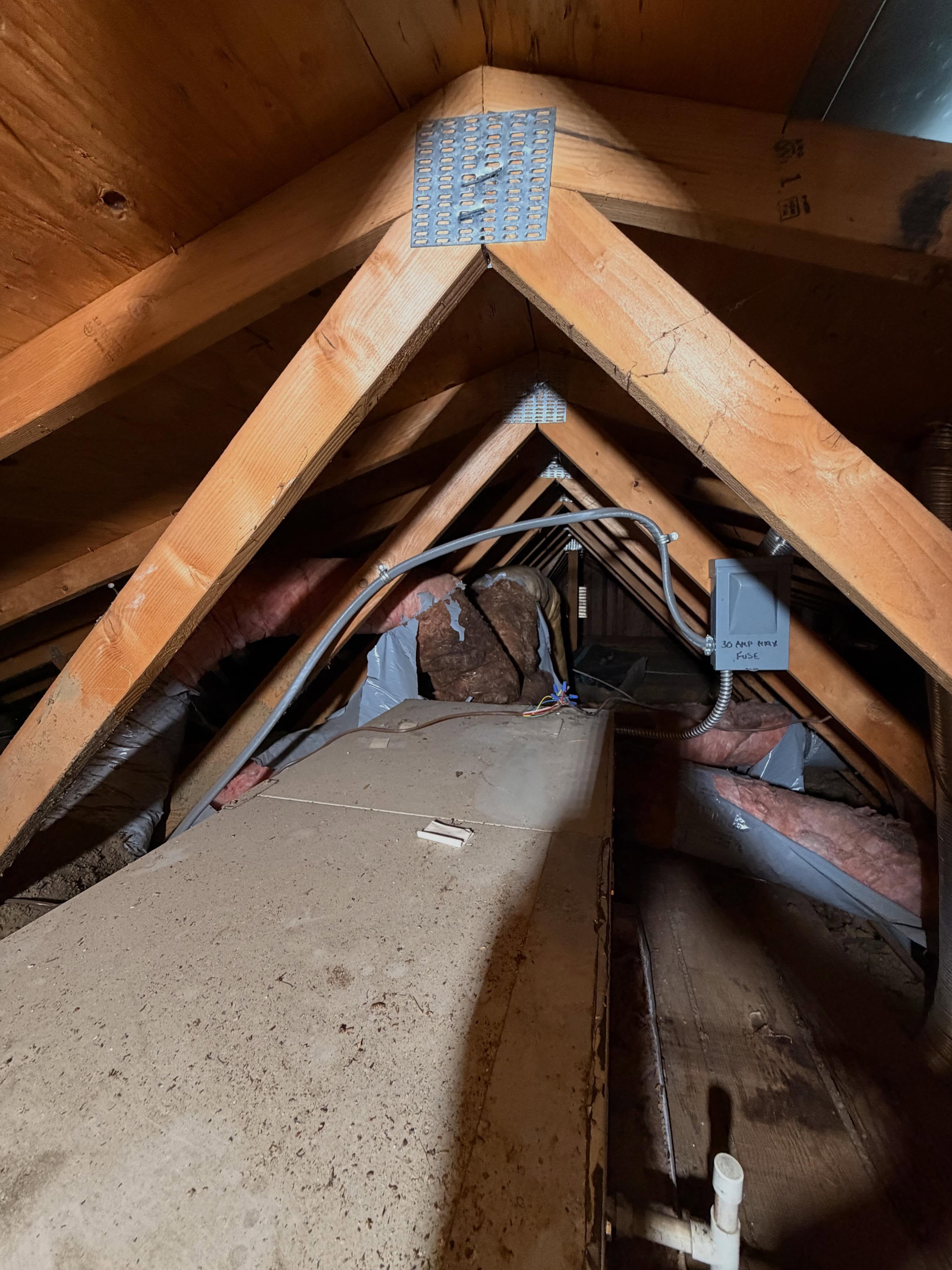
Ducts in an Orangevale attic may be forty years old, and new equipment can't make up for supply runs that leak into the attic on a 100°F afternoon. California's 2025 Building Energy Efficiency Standards apply to HVAC alterations, and on many changeouts the existing ducts have to pass a leakage test or be repaired before final. The duct leakage test guide explains how the test works and what happens if the ducts fail.
Because the test happens anyway, the replacement is a good time to look at return grilles, crushed flex runs and supply registers in rooms that never cooled well. Fixing them during the same job costs less than coming back later. If new duct runs are added, they have to meet current insulation requirements, which is another reason to plan duct work and equipment as one scope rather than two separate visits.
The Sacramento County permit path for an Orangevale changeout
Orangevale has no city building department, so every AC replacement goes through the county. The sequence looks like this:
| Step | Who handles it | Detail |
|---|---|---|
| Permit application | Your contractor | Sacramento County lists residential heating and cooling, new install or replacement, among permits issued automatically online once paid (county FAQ) |
| Title 24 energy forms | Contractor, then HERS rater | Installation forms and third-party verification are registered through a data registry; the CHEERS homeowner page explains the process |
| Field verification | Independent HERS rater | Typically duct leakage and other required tests |
| Final inspection | Sacramento County Building Permits & Inspection | Booked online, by phone at (916) 875-5296 or by text; the county doesn't set exact appointment times |
Straight AC or heat pump in a SMUD home
When we checked SMUD's heating and cooling rebate page on October 30, 2026, it listed rebates only for heat pump systems: $3,000 for variable-stage or $2,000 for two-stage (15.2 SEER2 minimum) when replacing gas heat, and $1,000 for a multi-stage heat pump replacing an existing electric system. Single-stage systems don't qualify, and the installer must be a participating SMUD Contractor Network contractor, so check SMUD's list for every company you get a bid from. Our SMUD rebate guide has the full rules.
The $1,000 electric-to-electric category is easy to overlook in Orangevale, where 37.4% of occupied homes already heat with electricity. Beyond SMUD, the federal 25C credit ended for equipment placed in service after December 31, 2025, per the IRS, and TECH Clean California's single-family HEEHRA funds were fully reserved as of February 24, 2026. For a ballpark before any visit, try the cost calculator.
From first visit to county final
The order is the same whether the old unit is still limping along or already dead: a site visit with a load calculation and duct check, a written bid that names the refrigerant, equipment and scope, the online permit, installation, HERS verification and the county final. For how the service works in general, see our AC replacement service page; the Orangevale area page covers local agencies. If the existing system might still be repairable, compare against AC repair in Orangevale first. Neighbors in Citrus Heights and Folsom follow the same SMUD rules but use different permit offices.