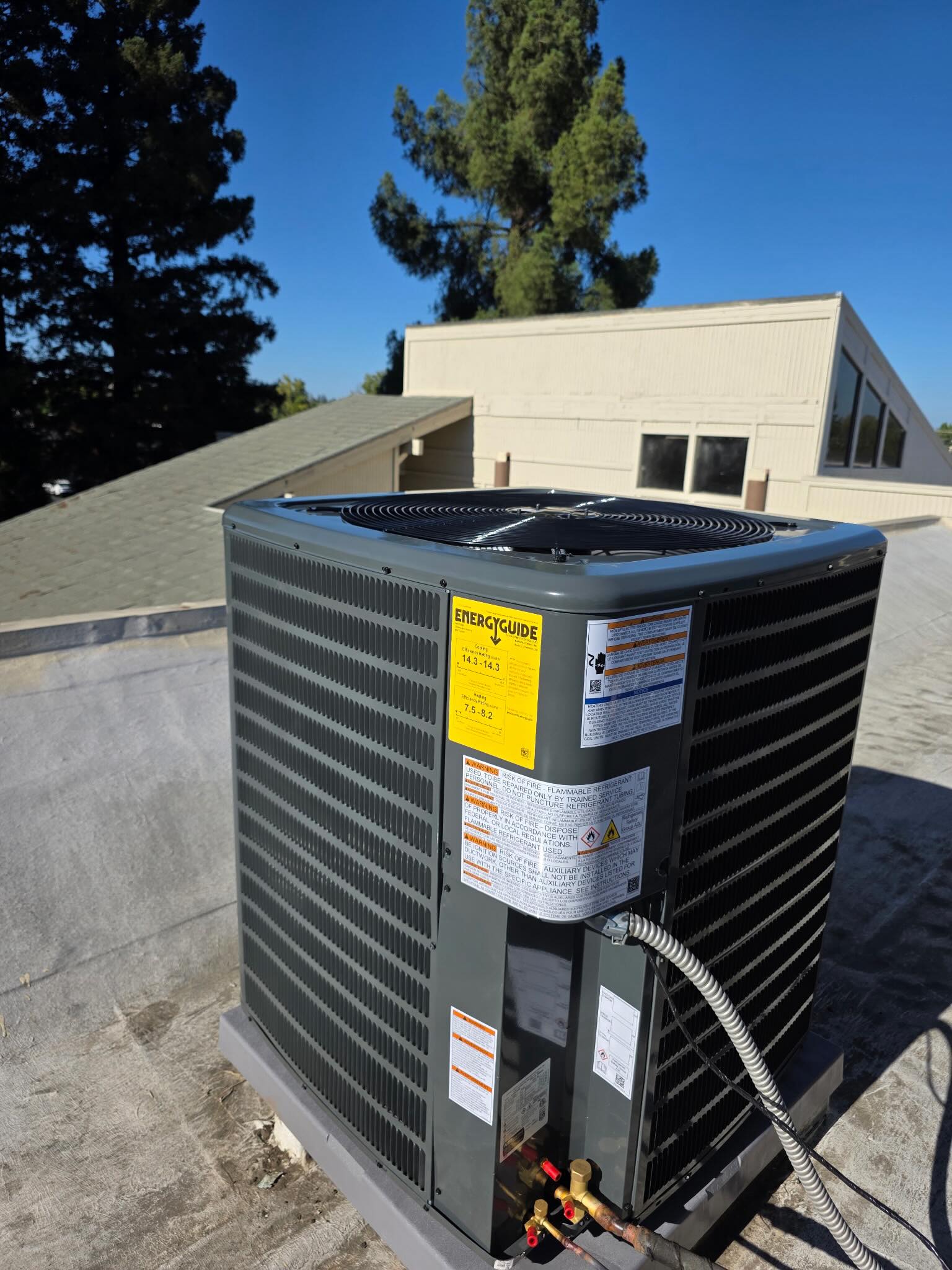
AC Installation in Arden-Arcade · 7 sections
Four starting points we see in Arden-Arcade
The right approach depends on what is already in the house. These are the situations that come up most in a community where nearly 57% of homes were built between 1940 and 1969 and only about 5.6% date from 2000 or later, per the Census Bureau's American Community Survey.
| Starting point | Usual approach | Main things to check |
|---|---|---|
| Gas furnace with ducts, no AC | Add a condenser and a coil on the furnace, or a heat pump | Blower capacity, return size, coil fit in the furnace closet |
| No ducts (wall or floor heater, or electric baseboard) | Ductless mini-split, or new ducts with a central system | Attic or crawlspace access, electrical capacity |
| Garage conversion or room addition | Ductless unit, or a separate small system | Block load for the new space; limits on enlarging the existing system |
| New detached or attached ADU | Its own system, usually a ductless heat pump | Separate permit, ADU's own energy compliance |
Adding AC to a furnace-only house
On paper this is the simplest case: put a coil on the furnace, set a condenser outside and connect them. In a mid-century Arden-Arcade home, three things complicate it. The furnace blower may not be able to move the larger airflow cooling needs. The return may be a single grille sized for heat. And the furnace may be old enough that hanging a new coil on it makes little sense.
For that last reason, many owners in this position install a heat pump instead of a straight AC. The outdoor unit is similar, it provides the cooling the house never had, and it can take over most of the heating. If it replaces gas heating and meets SMUD's equipment and installer rules, it may also qualify for SMUD rebates that an AC-only installation would not. Compare the options on our Arden-Arcade heat pump installation page.
Whichever you choose, the size should come from a load calculation of the house, explained in our Manual J guide. With July highs averaging 94.4°F in NOAA's 1991–2020 normals for Sacramento 5 ESE, the cooling load, not the heating load, usually sets the size here.
Homes and units without ductwork
Some older houses and many apartments in Arden-Arcade were never ducted. Running new ducts through a low-slope attic or a tight crawlspace is possible, but it is invasive and can be impractical in a finished home. A ductless mini-split puts small indoor heads in the rooms that need them and a single outdoor unit outside, with only a small wall penetration for each line set. Our ductless vs. central ducted comparison covers the tradeoffs.
Many ductless systems are heat pumps that heat as well as cool, which matters in a house whose only other heat is an old wall heater. For apartments and duplexes, an outdoor unit's location also needs thought: setbacks, a level pad or wall bracket, a short and protected line-set route, and a condensate drain that doesn't spill onto a neighbor's walkway. Those details are easier to settle on a site visit than over the phone.
Garage conversions, additions and ADUs
Arden-Arcade's larger lots and older single-car garages make conversions and ADUs common projects. Sacramento County's building FAQ lists garage conversions, room additions and accessory dwelling units among the projects that need a permit, separately from the heating and cooling permit itself.
The 2025 Energy Code changed how cooling for new space is handled. The California Energy Commission's summary of 2025 single-family changes describes block load calculations for additions and limits on adding capacity to an existing system. In practice, a converted garage usually can't just be tied into the house's old ducts. A dedicated ductless unit is often the cleanest answer; see our guide to mini-splits for ADUs, garages and additions.
Electrical service in older homes
A new air conditioner or heat pump needs a dedicated circuit and a disconnect at the outdoor unit. Many mid-century homes have smaller electrical services than modern houses, and some panels are already full. We check the panel before recommending equipment, because the answer can change the plan: a variable-speed system with lower starting current, or a small ductless unit, may fit where a large central system would require a panel upgrade.
If a panel upgrade is needed, Sacramento County lists residential electrical panel repair or replacement among the permits it can issue automatically online. For heat pump projects that replace gas heating, SMUD lists rebates of up to $5,500 for panel and circuit work done as part of that conversion. Our panel requirements guide explains what to look for.
Permit and verification for a new installation
Because Arden-Arcade is unincorporated, a new cooling system is permitted by the Sacramento County Building Permits & Inspection Division. The county's FAQ lists residential heating and cooling, new install or replacement, among online auto-issued permits. New ducts bring duct leakage verification by an ECC rater (formerly HERS) under the 2025 Energy Code, which applies to permit applications filed from January 1, 2026; our duct leakage test guide explains that step.
For an ADU or addition, the cooling equipment is usually reviewed as part of the larger building permit and its energy compliance documents, rather than on its own. That means the HVAC design should be settled before the building plans are submitted, not after framing, so the equipment, line-set routes and electrical circuits appear on the approved set.
Planning your installation
Start with what you want cooled and what's already there. For an early range, try the cost calculator, and see the general AC installation service page for our scope. If you already have central air and it's failing, AC replacement in Arden-Arcade or AC repair is the right page. Homeowners in Citrus Heights and Orangevale face similar first-time cooling projects, and the Arden-Arcade overview covers local permits and utilities.