AC Installation in Orangevale · 7 sections
Where new cooling goes in Orangevale
The ACS year-built table counts 1,879 Orangevale housing units from the 1950s, 2,166 from the 1960s and 471 older than that. Houses from those decades often began with heat only, and some still have no central cooling. On the other end, 771 units have gone up since 2010, and new ADUs and additions keep adding rooms that the existing system was never sized for. Each starting point leads to a different kind of installation:
| Starting point | What installation usually involves | Rules that shape it |
|---|---|---|
| Gas furnace with heating ducts, no AC | New condenser plus an indoor coil on the furnace; return air often enlarged | County mechanical permit; Title 24 alteration requirements |
| Wall or floor heater, no ducts | Ducted system if the attic allows, or ductless heads in the main rooms | Permit; panel and circuit capacity; duct insulation if new ducts are added |
| Converted garage or room addition | Ductless head, or extending ducts only if the existing system has spare capacity | Title 24 rules for additions, including block-load sizing and capacity limits |
| New detached or attached ADU | Its own heat pump system, usually ductless or a small ducted unit | ADU building permit; new-construction energy rules |
| Manufactured home without AC | Split system matched to the existing furnace, or a packaged unit | Equipment and installation must follow listings for manufactured homes |
Heating ducts weren't built for cooling
The most common Orangevale installation is the simplest on paper: a house already has a gas furnace and ducts, so you add a coil and a condenser. The catch is airflow. Cooling needs considerably more air than heating, and ducts and return grilles sized for a 1960s furnace are frequently too small. Install an AC on them as-is and the coil runs cold, the blower strains and far rooms stay warm. Our return air sizing guide explains the most common fix.
Before quoting, we measure the existing ducts, check the furnace blower's capacity and look at whether the furnace itself is near the end of its life. Adding a new coil to a furnace that will need replacing in a few years can mean paying for some of the same work twice.
ADUs, garage conversions and additions
Sacramento County's permit FAQ lists ADUs, garage conversions and room additions among projects that need a permit, along with heating and cooling systems themselves. The cooling for those spaces is part of the energy compliance for the project, which changes how it's sized.
The California Energy Commission's summary of 2025 single-family changes says a block load may be used to size a system that serves an addition, and it sets maximum heating and cooling capacities for additions based on the calculated loads. For newly built homes, the prescriptive path calls for heat pump space heating in every climate zone. In practice, a new Orangevale ADU almost always gets a heat pump rather than an AC plus a separate heater, and a garage conversion is often best served by a ductless unit. The guide to mini-splits for ADUs and additions covers that choice in detail.
Older homes without ducts: ducted, ductless or both
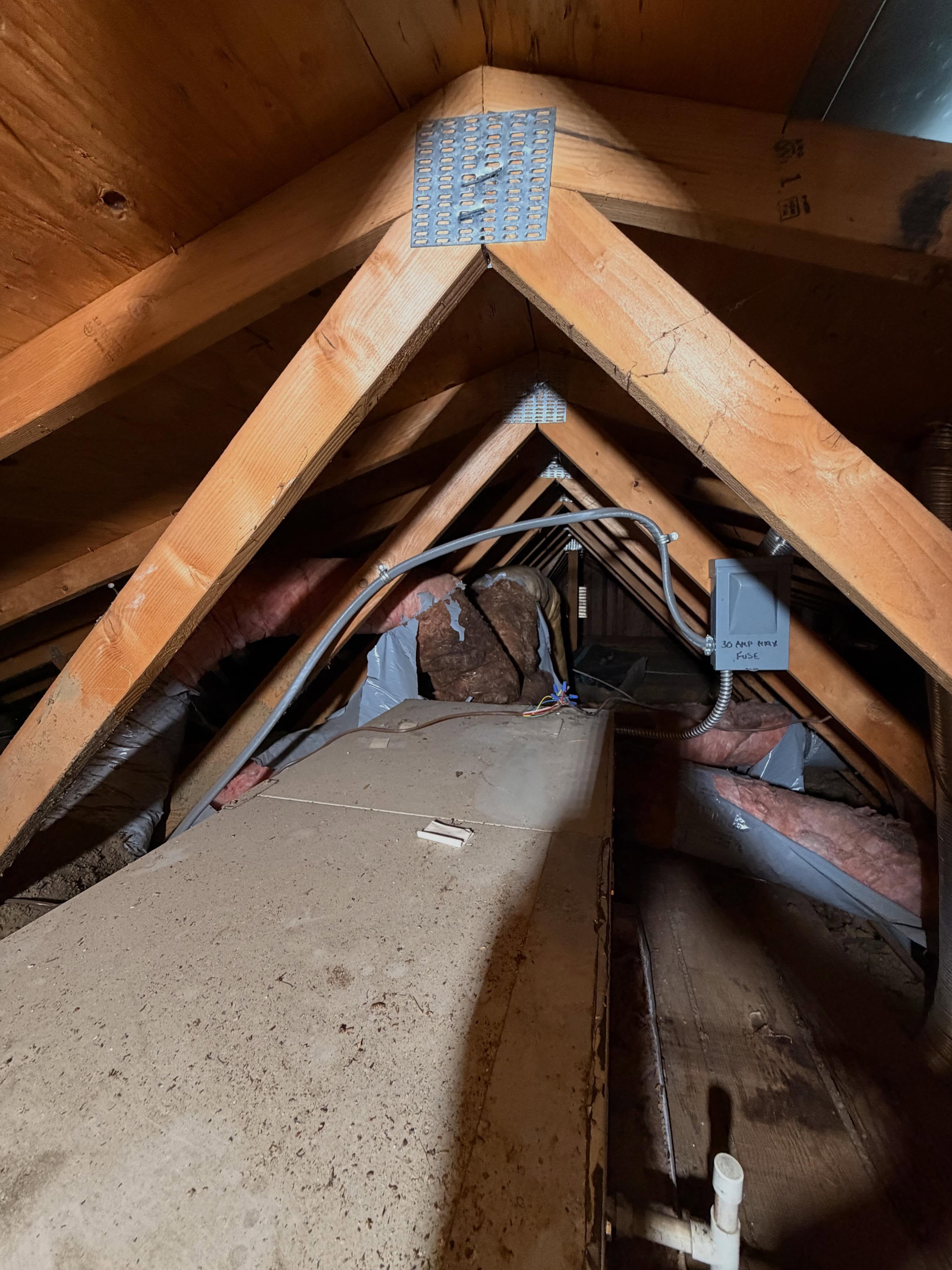
Whether a 1950s Orangevale house can take new ducts depends on attic height, roof framing and where a furnace or air handler could sit. Some houses take a conventional system easily. Others have shallow attics or low-slope additions with no room to work, and ductless heads make more sense for at least part of the house. Our ducted versus ductless comparison covers the trade-offs, and many installs here end up as a mix.
Homes that relied on a wood stove or fireplace need extra care in planning. Sac Metro Air District's Rule 421 restricts or prohibits wood burning on many winter days, so a new system in these homes should be sized to heat the whole house by itself, which usually points to a heat pump rather than cooling-only equipment.
Panel capacity comes before equipment choice
A house that never had central air may have an electrical panel that never anticipated a condenser. We check panel size, open breaker spaces and the route for a new circuit before recommending equipment. When a panel needs work, the county lists residential panel repair or replacement among the permits that can be issued automatically online, the same as heating and cooling. If a heat pump is under consideration, SMUD's rebate page also lists Go Electric rebates of up to $5,500 for a smart panel, subpanel or new circuit, with the subpanel and circuit rebates available only on gas-to-electric conversions. The panel requirements guide explains what to look for.
Adding AC to a manufactured home
Orangevale has 434 mobile homes according to the ACS units-in-structure table. Under federal standards in 24 CFR 3280.709, every appliance in a manufactured home must be installed according to its listing and the manufacturer's instructions, and a forced-air system's return must be designed so the fan can't disturb combustion air. Adding a coil to the existing furnace therefore means using a coil approved for that furnace model, and checking the underfloor ducts, which were sized for heat, before the condenser goes in.
Planning an Orangevale installation
Every new system starts with a Manual J load calculation for the space being conditioned, followed by a duct or ductless layout, an electrical check and the county permit. Our AC installation service page describes the general process, and the Orangevale service area page covers local agencies and utilities. If the house already has an aging AC rather than none at all, AC replacement in Orangevale is the more relevant page; if you're adding heating and cooling together, read heat pump installation in Orangevale. Owners in Citrus Heights and Folsom face similar choices. For a rough budget, use the cost calculator.