Duct Sealing
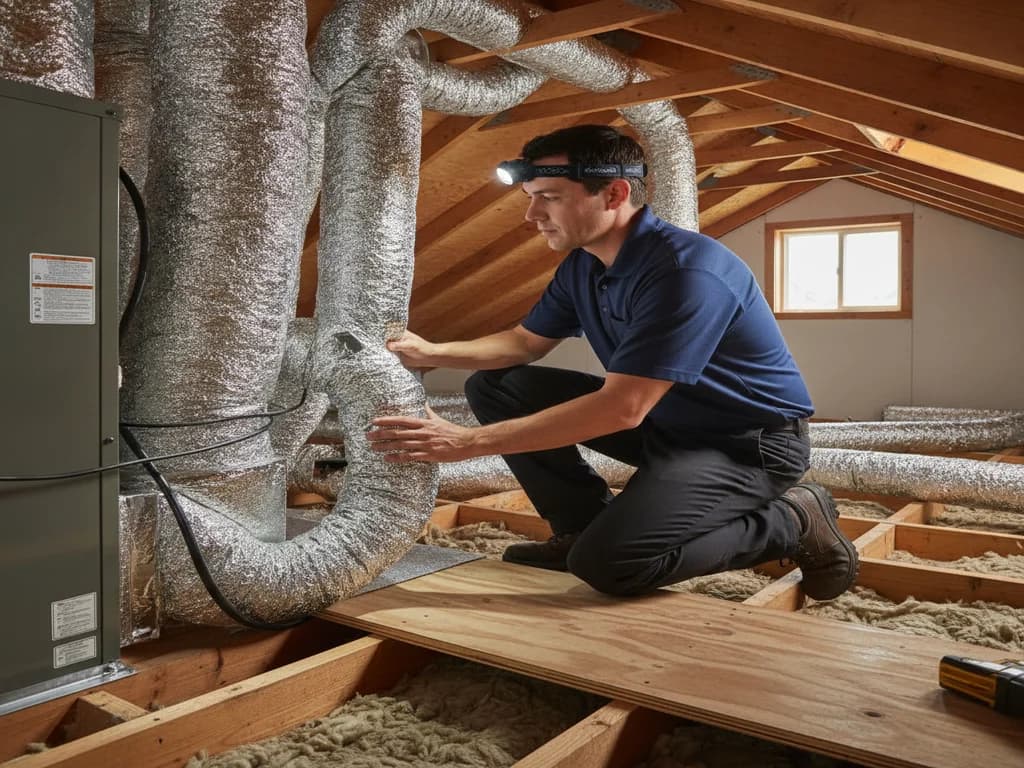
Statewide HVAC seals leaky residential duct systems across the Sacramento region. A typical older duct system can leak twenty to thirty percent of the conditioned air it's carrying — straight to the attic — before it reaches the rooms it's supposed to supply. Sealing with mastic at every joint recovers that loss and brings the system up to current Title 24 standards.
What duct sealing covers
- Mastic sealing at supply and return plenum connections
- Mastic at every branch takeoff, splitter, and boot connection
- Return-air plenum sealing — often the single largest leakage point
- Flex-duct-to-collar reseating and sealing where tape has failed
- Register-boot-to-drywall sealing where supply air leaks into stud bays
- Documentation of what was sealed and where
Duct Sealing across Greater Sacramento
All areas →- Sacramento County
- Sacramento · Elk Grove · Folsom · Citrus Heights · Rancho Cordova · Arden-Arcade · Orangevale
- Placer County
- Roseville · Rocklin · Lincoln · Auburn · Loomis · Granite Bay · Newcastle · Meadow Vista
- El Dorado County
- El Dorado Hills · Placerville · Cameron Park
- Nevada County
- Grass Valley · Nevada City · Penn Valley · Lake of the Pines
- Yolo County
- Davis
Duct Sealing questions, answered
Why mastic and not just duct tape?
Despite the name, cloth-backed duct tape fails on ducts. Its adhesive dries out in attic temperatures within a few seasons and the tape peels off. Mastic — a brushable, water-based sealant — bonds to metal and flex-duct connections and stays sealed for the life of the duct system. California code requires mastic (or equivalent) for duct sealing, not tape.
How much air does a typical home lose through unsealed ducts?
Pre-2000 systems commonly test at 20–30 percent duct leakage to the outside — meaning that fraction of your conditioned air never reaches the rooms. A properly sealed system targets single-digit leakage. The energy and comfort difference is substantial.
Does duct sealing require a permit in California?
Duct work performed as part of an HVAC changeout triggers Title 24 requirements including a duct-leakage test by a third-party HERS rater. Standalone duct sealing on an existing system without equipment replacement generally does not require a permit, but we document the work either way.
How much comfort improvement should I expect?
Homes with weak airflow at the far registers, large room-to-room temperature differences, or an HVAC system that runs constantly often see the biggest change. Homes that already perform well won't see as much. We assess leakage before quoting the work.
More from Statewide HVAC
HVAC Services
- air-conditioning
- cooling system repair
- AC installation
- air conditioner replacement
- ductless heating and cooling
- heating
- heating-repair
- heating system repair
- furnace-installation
- furnace-replacement
- electric heat pump install
- heat-pump-repair
- heat-pump-replacement
- commercial-hvac
- commercial-hvac-repair
- commercial-hvac-installation
- All services
Service Areas
- Sacramento County
- Sacramento · Elk Grove · Folsom · Citrus Heights + more
- Placer County
- Roseville · Rocklin · Lincoln · Auburn + more
- El Dorado County
- El Dorado Hills · Placerville · Cameron Park
- Nevada County
- Grass Valley · Nevada City · Penn Valley · Lake of the Pines
- Yolo County
- Davis