Sacramento HVAC guide · 9 sections
- 01A cooling-first city: what Sacramento's summers ask of an air conditioner
- 02Sacramento's housing, era by era
- 03Owners, renters and the heating fuel already in the house
- 04Sacramento's electrification rules: what's actually in force for an existing home
- 05SMUD power, PG&E gas, and the rebates that are left
- 06Pulling an HVAC permit with the City of Sacramento
- 07Neighborhoods we work in across the city
- 08Our HVAC services in Sacramento
- 09How to compare HVAC bids in Sacramento
A cooling-first city: what Sacramento's summers ask of an air conditioner
Sacramento sits about 26 feet above sea level, where the Sacramento and American Rivers meet, and its HVAC loads are set by summer. NOAA's 1991–2020 normals for the Sacramento 5 ESE station put the average July high at 94.4°F and the average January low at 41.1°F. The city averages about 76 days a year at or above 90°F and about 14 at or above 100°F. The official record, 116°F, was set on September 6, 2022.
The delta breeze is the city's natural relief valve. On many summer evenings, cooler air pushes in from San Francisco Bay through the Sacramento–San Joaquin Delta, and nighttime temperatures drop sharply. That pattern helps an AC that is sized correctly. It also hides problems in one that isn't: a system can keep up after sunset, then fall behind every afternoon during a heat wave once the breeze stops. Afternoon complaints in late August are often a sizing, airflow or refrigerant-charge problem that only shows up when outdoor temperatures pass 100°F.
Winters are short and mild by comparison, which is why so many Sacramento homeowners now look at heat pumps. A heat pump that only has to cover lows near 41°F rarely needs its backup heat. Our guide to why an AC stops cooling covers the usual hot-afternoon failures, and the heat pump vs. furnace comparison covers the heating side.
Sacramento's housing, era by era
The city's median home was built in 1976, but that median hides a very even spread. The Census Bureau counts 212,485 housing units in Sacramento (ACS 2020–2024). Roughly a fifth to a quarter of them fall into each of the five eras below, so a contractor working across the city sees every kind of system, from a retrofitted 1920s duct run to a builder-installed 2015 heat pump.
| Built | Units | Share | What we usually check first |
|---|---|---|---|
| 1939 or earlier | 23,003 | 10.8% | Whether ducts were added later, and where they run; electrical capacity for new equipment |
| 1940–1959 | 40,406 | 19.0% | Undersized returns, uninsulated attic ducts, original floor or wall furnaces |
| 1960–1979 | 50,443 | 23.7% | Second- or third-generation equipment on original ductwork |
| 1980–1999 | 48,989 | 23.1% | Furnace and AC ages that no longer match, and coils left over from earlier swaps |
| 2000 or later | 49,644 | 23.4% | Builder-grade sizing and first-time replacement of original systems |
Owners, renters and the heating fuel already in the house
Sacramento is close to evenly split between owners and renters: 51.7% of the city's 200,321 occupied units are owner-occupied. About 59% of all units are single-family detached homes, and nearly 24% are in buildings with five or more units. That matters for HVAC because the person who lives with the system isn't always the person who decides on it, and because larger apartment buildings are handled differently by utility programs (more on that below).
Heating fuel is more mixed here than many people expect. Census figures show 55.1% of occupied Sacramento homes heat mainly with utility gas and 41.3% mainly with electricity. Those electrically heated homes include apartments with heat pumps or wall heaters and single-family homes that already made the switch. For a homeowner weighing a furnace against a heat pump, it means the choice isn't unusual in this city. Plenty of neighbors have already made it.
Sacramento's electrification rules: what's actually in force for an existing home
Sacramento drew headlines for its electrification policy, and a lot of homeowners still assume the city requires heat pumps. Here is where things stood when we checked the city's own pages on October 30, 2026.
New construction. The city's New Building Electrification Ordinance took effect January 1, 2023, and required new buildings of three stories or fewer to be all-electric. After an April 2023 federal appeals ruling against Berkeley's similar ordinance, the city suspended enforcement. The ordinance applied to new buildings. It never covered replacing a furnace in an existing home.
Existing buildings. City Council adopted an Existing Building Electrification Strategy on May 14, 2024, as a roadmap toward carbon neutrality by 2045. The city's FAQ, last updated April 2026, answers the question directly. Asked whether the city will require homeowners to retrofit or replace existing gas appliances, it says no, calls the strategy a guiding framework rather than a mandate, and says the city is not contemplating requirements that would force people to replace gas appliances with electric.
In practice, a Sacramento homeowner whose furnace fails can replace it with a new gas furnace, a heat pump or a dual-fuel system, subject to the state energy code. Our explainer on California's gas furnace rules covers the state-level air district proposals that are often confused with city policy.
SMUD power, PG&E gas, and the rebates that are left
Sacramento homes get electricity from SMUD, the public utility, and natural gas from PG&E. For HVAC, SMUD is the one that matters, because it still runs a heat pump rebate program after most other incentives have closed. On November 12, 2026, SMUD's HVAC rebate page listed:
- Gas to electric: $3,000 for a variable-stage heat pump or $2,000 for a two-stage heat pump (15.2 SEER2 minimum) that replaces a gas system. Single-stage equipment doesn't qualify.
- Go Electric add-ons: up to $5,500 toward a smart panel, subpanel or new circuit, with the subpanel and circuit rebates available only together with a gas-to-electric conversion.
- Electric to electric: $1,000 for upgrading an existing electric heat pump to a two-stage or variable-stage model.
- Conditions: an active SMUD account, a home individually metered by SMUD (buildings of up to four units qualify if each unit is metered separately), a permitted installation, and a participating contractor in the SMUD Contractor Network who submits the rebate. Funding is limited.
- Outside SMUD, the picture is thin. TECH Clean California's HEEHRA single-family funding in Northern California has been fully reserved since February 24, 2026, and the federal 25C tax credit ended for equipment placed in service after December 31, 2025. Our SMUD heat pump rebate guide covers how the program works, and the regional rebate navigation guide covers everything else.
Pulling an HVAC permit with the City of Sacramento
Inside city limits, HVAC permits come from the Community Development Department's Building Division, not the county. The city treats a residential HVAC change-out in a one- or two-family dwelling as a minor permit, meaning no construction plans are required and code compliance is checked in the field.
California-licensed contractors can buy that permit online through the city's Public Permit Portal. Sacramento also lets homeowners pull a residential HVAC change-out permit themselves through the portal for a single-family home or duplex, which few nearby jurisdictions advertise. Any minor permit can also be requested by email. The Public Counter is at 300 Richards Boulevard, 3rd Floor, and takes appointments for minor permits. The city warns that work started before a permit is issued is subject to a penalty fee.
The permit is also how state energy rules get enforced. A replacement documents Title 24 compliance and, where it applies, third-party HERS verification such as a duct leakage test, explained in our Title 24 duct leakage guide. Under the 2025 Energy Code, in effect since January 1, 2026, a newly installed heat pump's electric backup heat may only run below 35°F outdoors, except during defrost, and the installer certifies the setting.
Neighborhoods we work in across the city
Statewide HVAC works throughout Sacramento's ZIP codes, from 95811 downtown to 95838 in the north. A few areas show how much the work changes from one part of the city to another:
- East Sacramento and the Fabulous Forties: some of the city's largest and most architecturally distinctive homes, between Midtown and Sacramento State. Big floor plans and finished spaces often mean multiple systems or zoning.
- Midtown, Poverty Ridge and the Newton Booth area: neighborhoods on and around the original 1848 street grid, where attic and crawlspace room for ducts is often the limiting factor and ductless mini-splits are worth considering.
- Land Park, Curtis Park, Oak Park and Tahoe Park: established neighborhoods south and east of downtown. Ages vary street to street, so we check the duct system and electrical panel before recommending equipment.
- North Sacramento and Del Paso Heights: areas the city absorbed with its 1964 merger with North Sacramento.
- Natomas: the city grew here mainly through annexations in the 1970s, 1980s and 1990s, so much of the housing is newer tract construction now on its first or second equipment replacement.
- The Pocket and Meadowview: south-side neighborhoods the city once grouped with Land Park as one planning area. Homes here span several decades, so equipment and duct condition get assessed one house at a time.
Our HVAC services in Sacramento
Each service has its own Sacramento page with the details. This page only routes you there.
| Service | Typical Sacramento situation |
|---|---|
| AC repair | A system that keeps up in the evening but loses ground on 100°F afternoons |
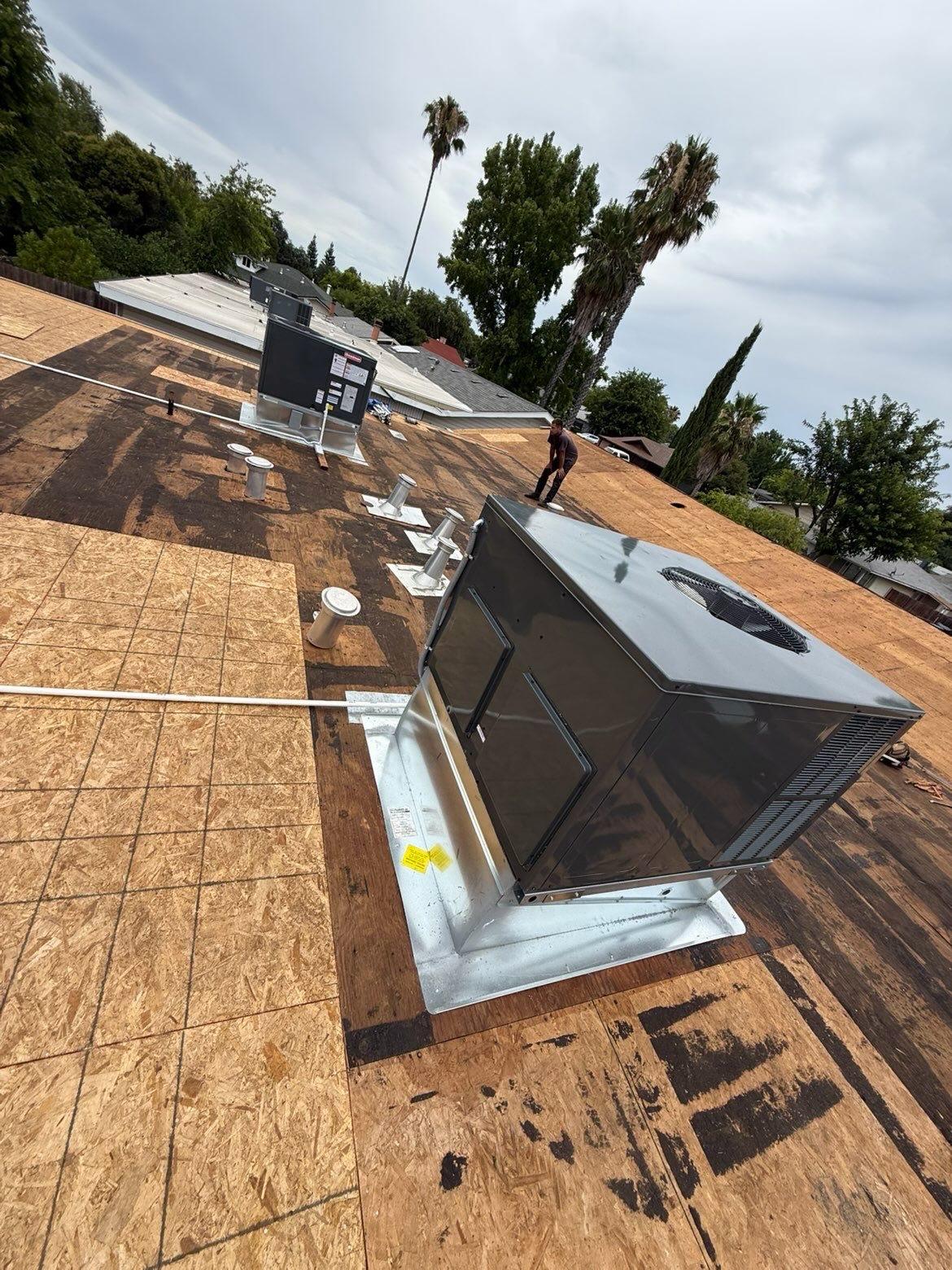
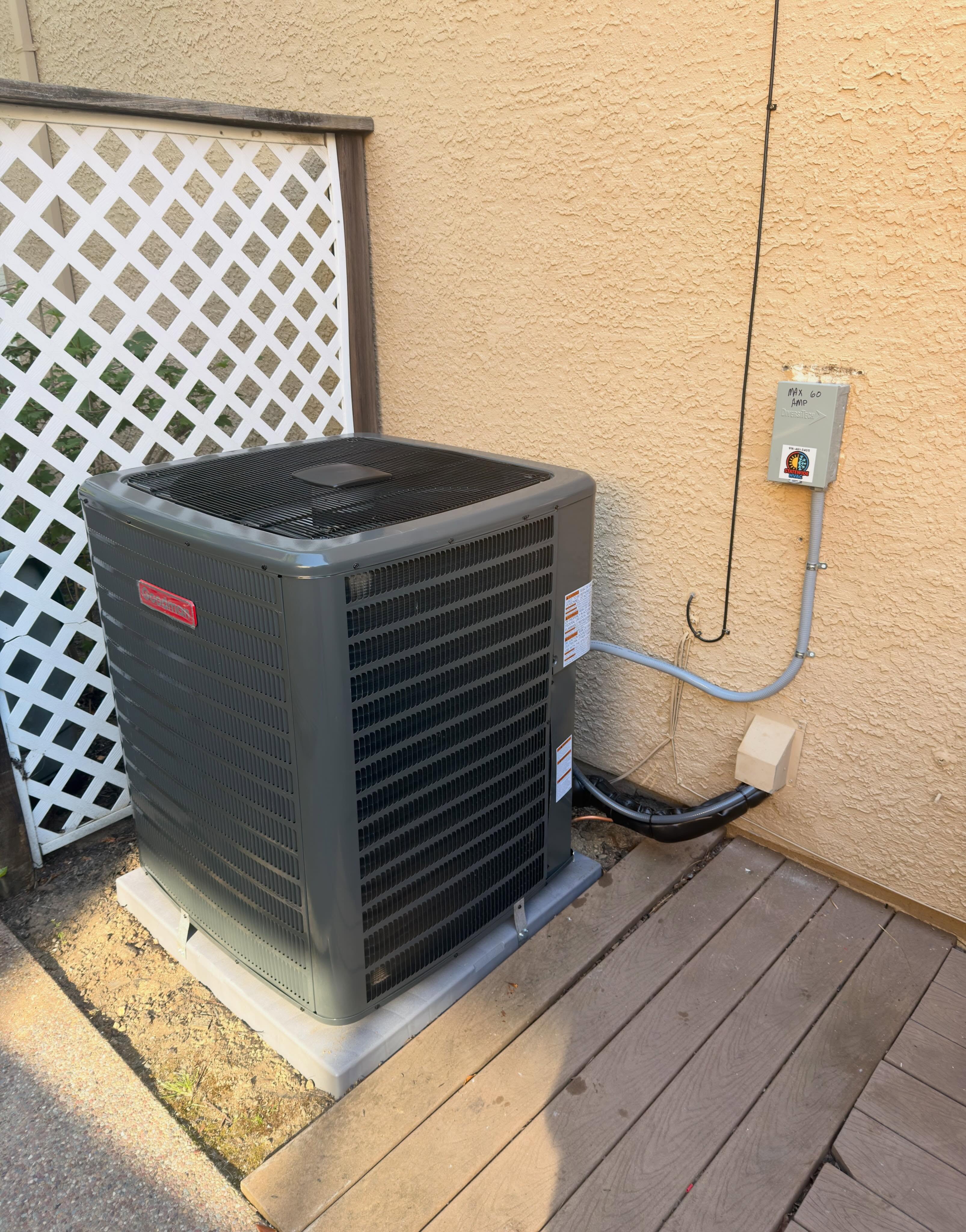
| AC replacement | Replacing a worn condenser and coil under a city minor permit |
| AC installation | Adding central air or ductless cooling to a pre-war home |
| Furnace repair | No heat on a cold, foggy January morning |
| Furnace replacement | Replacing a gas furnace, which city policy still allows |
| Heat pump installation | Gas-to-electric conversions that may qualify for SMUD rebates |
How to compare HVAC bids in Sacramento
With this many contractors working in the city, bids can vary widely. These checks separate the solid ones:
- Check the license yourself. Use the CSLB license lookup to confirm an active C-20 classification. Statewide HVAC is CSLB #1023360 (C-20 and C-43 Sheet Metal), licensed since 2017.
- Ask who pulls the permit and when. The city's portal makes a change-out permit easy to get, so there's little reason for a bid to leave it out.
- Ask about the SMUD rebate the right way. If a bid subtracts a SMUD rebate, confirm the equipment is two-stage or variable-stage and that the installer is enrolled in the SMUD Contractor Network, since only a participating contractor can submit it.
- Expect a load calculation. The same tonnage rarely suits a 1925 bungalow and a 2005 Natomas two-story. Our Manual J sizing guide explains what a proper calculation covers.
- Plan around age, not just failure. Our Sacramento HVAC lifespan guide covers how long equipment lasts in this heat, and the cost calculator gives a starting range.
- Statewide HVAC also serves neighboring Arden-Arcade, Rancho Cordova and Elk Grove, plus the rest of Sacramento County. To set up a visit, use the contact page or call (916) 461-3405.